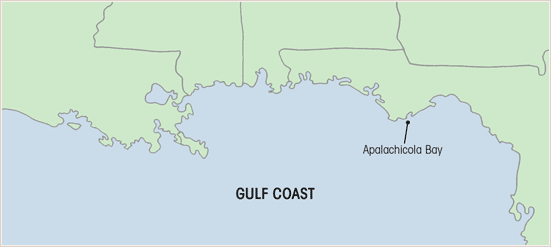
Gulf Coast
Thank the famed Gulf oyster for keeping oysters from being an exclusive treat. Oysters grow like weeds down in the Gulf. They are still natural-set, still wild, more or less, and still affordable–more or less. The lower salinity levels of the Gulf have protected wild oysters from certain diseases in a way that hasn’t happened in the Chesapeake. Nearly half the oysters in Louisiana still come from the public fishery. Even the leased lands tend to be natural-set; the primary task of the farmers is to move spat from areas of lower salinity to areas of higher salinity as they mature. Not that the salinity ever gets truly high. Gulf salinity ranges from 5 to 15 ppt. And because the water never cools down much, the oysters never go dormant. They have no need to store up much of a glycogen food supply. What this means is that Gulf oysters don’t change in flavor throughout the year as much as northern oysters. They are a little fatter in winter, a little thinner in summer, but always mild and somewhat soft—they relax on the half-shell in a way cold-water oysters don’t. Gulf oysters are usually sold as generic oysters (learn why here)—indicative of a region that pays less attention to the nuances of different raw oysters than to their culinary possibilities. (This may be changing in Texas. Galveston Bay now has numerous oyster appellations.) After all, this is the land that invented Oysters Rockefeller, Po’ Boys, Barbecued Oysters, and myriad other oyster concoctions. (2013 update: More and more Gulf Coasters are keeping their oysters separate from the great, unwashed masses and treating them as premium product. Here is a Google Map of some of the best.)